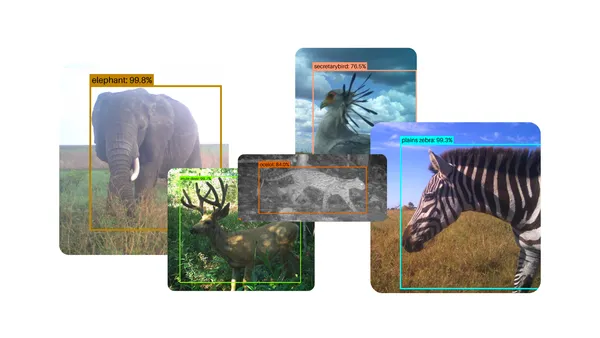
Google has launched SpeciesNet, a new open-source AI model designed to identify and track wildlife from images, positioning itself as a critical tool for global conservation efforts. This release represents a significant move by a major tech player to directly apply foundation model capabilities to environmental science, shifting from general-purpose AI to specialized, mission-driven applications with tangible ecological impact.
Key Takeaways
- Google has released SpeciesNet, an open-source AI model for wildlife identification and conservation.
- The model is trained on a massive, curated dataset of millions of wildlife images to recognize a vast array of species.
- It is designed to be accessible to researchers, conservationists, and even citizen scientists globally.
- The initiative aims to automate species monitoring, track biodiversity, and combat threats like poaching and habitat loss.
- This launch underscores a growing trend of applying large-scale AI to specialized, non-commercial domains like environmental protection.
Introducing SpeciesNet: An AI Tool for Global Biodiversity
SpeciesNet is a vision-based foundation model specifically engineered for the task of fine-grained wildlife classification. By processing images from camera traps, smartphones, or drones, it can identify species, and in some cases even individuals or behaviors, providing a scalable method for monitoring animal populations. The model's architecture is likely built upon Google's extensive expertise in large-scale vision models like ViT (Vision Transformer) and EfficientNet, but retrained and fine-tuned exclusively on ecological data.
The power of the model stems from its training dataset—a meticulously curated collection of millions of wildlife images sourced from research institutions, conservation projects, and verified public contributions. This dataset's scale and diversity are crucial for the model's accuracy across different geographies, lighting conditions, and animal poses. By open-sourcing SpeciesNet, Google is not just providing a tool but also establishing a potential standard dataset and benchmark for the entire field of computational ecology.
Industry Context & Analysis
The launch of SpeciesNet enters a competitive but nascent landscape for AI in conservation. Unlike generalized computer vision APIs from OpenAI (CLIP) or Amazon Rekognition, which are broad-purpose and commercial, SpeciesNet is a specialized, open-source model focused purely on ecological accuracy. This contrasts with other academic or NGO-led initiatives, such as those using Megadetector from Microsoft AI for Earth, which primarily focuses on detecting animals in camera trap images before classification. SpeciesNet appears to integrate both detection and fine-grained classification into a more comprehensive pipeline.
Technically, the major implication is the validation of the "foundation model + specialization" approach for science. While models like GPT-4V can identify animals, their performance on rare species or subtle morphological differences is untested and unreliable for scientific work. SpeciesNet's targeted training likely achieves far higher precision on ecological benchmarks. For context, the leading platform for citizen science biodiversity data, iNaturalist (a joint initiative by the California Academy of Sciences and the National Geographic Society), has over 100 million observations and uses a bespoke AI model. SpeciesNet could either compete with or significantly augment such systems by providing a state-of-the-art, freely available model backbone.
This follows a broader industry pattern of tech giants investing in "AI for Good" projects that also serve as long-term strategic plays. Google's parent company, Alphabet, has a history through its Google.org philanthropy and projects like Global Fishing Watch. However, releasing a full open-source model like SpeciesNet is a more substantial commitment that builds goodwill, gathers unique data, and develops expertise in a high-impact vertical. It also aligns with increasing investor and regulatory pressure for sustainable and ethically applied AI.
What This Means Going Forward
The immediate beneficiaries are conservation biologists, park rangers, and environmental NGOs, who gain a powerful, cost-free tool to automate the labor-intensive process of sorting and identifying millions of camera trap images. This can accelerate population surveys, threat assessment, and the measurement of conservation intervention outcomes. Citizen science platforms could integrate SpeciesNet to improve automatic species suggestions, boosting public engagement and data quality.
For the AI industry, SpeciesNet sets a precedent for open-source, specialized foundation models in scientific domains. Success here could spur similar projects in medicine, material science, or climate modeling. It also creates a new benchmark dataset for multimodal ecological AI, potentially becoming the ImageNet for biodiversity, around which future research competitions and model improvements will revolve.
Key developments to watch will be the model's real-world adoption metrics, its performance on independent benchmarks compared to existing tools, and any partnerships Google forms with major conservation bodies like the IUCN or WWF. Furthermore, the long-term sustainability of the project—maintenance, dataset updates, and model iterations—will be critical. If successful, SpeciesNet could evolve from a tool into an essential piece of global infrastructure for monitoring and protecting planetary biodiversity.